
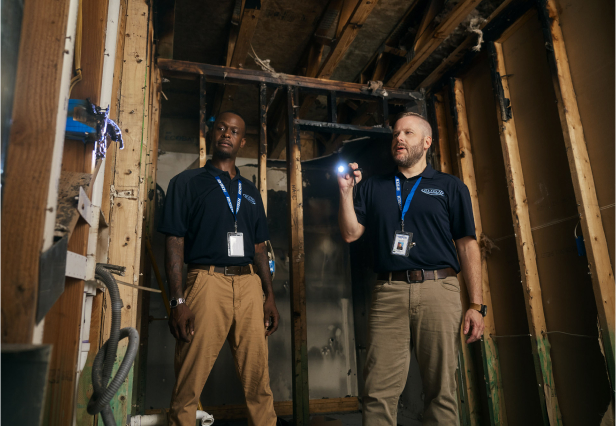
A house fire can affect much more than the room where flames were visible. Smoke and soot can move through hallways, wall and ceiling spaces, attics, and mechanical systems. Water used by firefighters or sprinklers can soak drywall, wood framing, flooring, cabinets, insulation, and belongings. In New Orleans, where high humidity and older building assemblies are common, finding and drying that hidden moisture becomes another part of the recovery process.
Homeowners usually have many questions once the fire department leaves. What can be saved? How does smoke cleanup work? What should you give your insurance company? How much could restoration cost, and what happens if the fire affected structural materials? Commercial property owners, managers, insurance agents, adjusters, carriers, and referral partners face similar questions while balancing occupants, business operations, contents, and documentation.
Rytech Restoration of Greater New Orleans provides 24/7 emergency mitigation for water, fire, smoke, and mold damage. The local team combines IICRC-certified technicians, advanced restoration equipment, insurance coordination, direct insurance billing when applicable, daily job monitoring, and local knowledge of New Orleans properties. Rytech's Greater New Orleans operation is backed by approximately three decades of company restoration experience and serves residential and commercial properties throughout Orleans and Jefferson parishes.
Knowing how fire damage behaves gives you a clearer path through the decisions that follow.
What Are Common Causes of Fire Damage in New Orleans Homes?
Cooking deserves special attention in New Orleans. The New Orleans Fire Department tells residents not to leave pots unattended, to keep oven mitts and towels away from open flames, to have pan lids available for grease fires, and to keep working smoke detectors in the home. The department also advises residents to call the fire department when a fire occurs, even if someone attempts to extinguish it.
Electrical problems, heating equipment, candles, smoking materials, grills, appliances, and other heat sources can also start residential fires. Local traditions add their own situations to consider. During Carnival season, for example, NOFD specifically reminds residents and visitors to use care with barbecue pits, open flames, smoking materials, and cooking or heating devices.
Property layout affects what happens after ignition. Greater New Orleans includes historic wood-framed homes, raised homes, shotgun houses, masonry buildings, apartments, multifamily properties, newer construction, restaurants, hotels, and commercial facilities. A fire that remains concentrated in one room can still send smoke and soot into adjoining spaces or upper portions of a building.
The person leading Rytech Restoration of Greater New Orleans brings restoration field experience to these situations. Before becoming a Rytech franchise owner, Holden LeBlanc worked as a water restoration technician. He later earned IICRC certifications covering Fire & Smoke, Odor, Applied Microbial Remediation, Applied Structural Drying, and Water Damage Restoration, along with OSHA General Industry Safety and Health training.
“My background started in the field as a restoration technician, and that experience still shapes how we approach a fire loss today. Around Greater New Orleans, we work with everything from older wood-framed and raised homes to masonry, drywall, slab construction, multifamily buildings, and commercial properties. A cooking or electrical fire may be the starting point, but smoke, soot, odor, and firefighting water can follow very different paths through those materials. Our IICRC training helps us investigate those conditions carefully and look for opportunities to restore affected materials before unnecessary removal.”
Holden LeBlanc, Owner, Rytech Restoration of Greater New Orleans
That restoration-first mindset matters because the most visibly damaged room does not always tell the entire story.
What Should I Do Immediately After a Fire?
Personal safety comes first. Leave the property, account for occupants, and follow directions from the New Orleans Fire Department or other emergency personnel. For an active fire emergency, call 911.
After emergency officials release the property, contact your homeowners insurance company or agent and a professional restoration company. The Louisiana Department of Insurance tells policyholders to contact their agent or insurance company as soon as possible following a loss. The department also recommends keeping records of expenses and receipts and maintaining a home inventory.
Photographs and video can help document rooms, belongings, and visible property conditions. Avoid immediately scrubbing soot-covered walls, ceilings, cabinets, furniture, or contents. Different fire residues and materials require different cleaning approaches, and an unsuitable technique can spread residue or make restoration more difficult.
Professional assessment gives the recovery process direction. Rytech Restoration of Greater New Orleans provides 24/7/365 emergency service, with live specialists available to answer questions and dispatch a certified technician. The local process begins with a damage assessment and restoration plan before work proceeds.
How Is Fire Damage Assessed and Inspected?
A professional inspection follows the damage beyond the obvious burn area. Technicians consider heat effects, smoke distribution, soot, odor, contents, structural materials, HVAC pathways, and water introduced during firefighting.
Imagine a kitchen fire in a New Orleans shotgun house. Flames may remain near the cooking area, while smoke moves through connected rooms. Firefighting water can take another path, moving beneath flooring, into cabinets, through walls, or into lower building assemblies.
That moisture should be measured rather than judged only by appearance. ANSI/IICRC S500 directs professional restorers to identify and document the extent of water migration using appropriate moisture-detection equipment. The standard specifically identifies tools such as moisture sensors, thermo-hygrometers, invasive and non-invasive moisture meters, infrared thermometers, and thermal imaging cameras.
Thermal imaging can make the inspection more efficient by showing apparent surface-temperature differences associated with possible moisture, particularly in difficult-to-reach areas. S500 also states that those thermal findings should be verified with a moisture meter.
Adjoining rooms deserve attention too. Water can move underneath walls or enter from above even when no moisture is visible on the surface of the floor covering.
Those findings become part of the project documentation. Photographs, affected-area records, moisture measurements when applicable, contents information, and restoration records help homeowners, property managers, agents, adjusters, and carriers work from a shared picture of the loss.
How Do I Start an Insurance Claim for Fire Damage?

Contact your insurance company or agent and report the loss. Provide the date, basic facts about the fire, and information about affected areas and belongings. Your insurance professional can explain the policy provisions, deductible, limits, and procedures that apply to the claim.
Louisiana Department of Insurance guidance specifically tells homeowners to contact their agent or insurance company as soon as possible after a loss. Its consumer materials also recommend maintaining accurate records of expenses, invoices, receipts, loss-of-use expenses, and a home inventory. The department provides a room-by-room Home Inventory Checklist to help Louisiana consumers create a detailed record for insurance claims.
Professional restoration documentation adds another layer. Inspection findings, photographs, moisture readings when applicable, affected materials, and project records can help communicate what technicians found and how restoration is progressing.
Most homeowners do not handle property claims every day. Agents, adjusters, carriers, and restoration professionals do. Having people who can explain their respective parts of the process makes an unfamiliar situation easier to navigate.
Rytech works directly with insurance companies and provides direct insurance billing when applicable. The Greater New Orleans operation also emphasizes daily job monitoring and communication, giving property owners and insurance professionals a documented view of restoration progress.
What Is the Difference Between Professional Fire Damage Restoration and DIY Cleanup?
A black mark on a wall can look like ordinary dirt. Fire residue is more complicated.
What burned affects the residue that remains. Cooking oils, wood, plastics, fabrics, electronics, and other materials can create different types of soot and smoke deposits. Painted drywall, finished wood, masonry, metal, flooring, carpet, and upholstery can also react differently to cleaning.
Professional restoration evaluates both sides of that equation before choosing a cleaning procedure. The material needs to tolerate the method, and the method needs to address the residue.
The larger difference is scope. A homeowner may see soot on a kitchen wall, while a trained technician is also considering smoke migration into adjoining rooms, odor, HVAC pathways, contents, hidden spaces, and firefighting water.
Rytech takes a restoration-first approach. The goal is to identify affected materials that can be successfully cleaned, dried, and restored so unnecessary demolition can be minimized. Materials that are beyond restoration can then be documented and removed as part of the mitigation process.
What Does Fire Damage Restoration Typically Cost?
There is no single reliable price for a New Orleans fire loss because a small cooking fire and a multi-room structure fire require very different restoration scopes.
Current 2026 national consumer data from Angi places the average fire damage restoration cost at approximately $27,477, with most projects ranging from about $3,083 to $52,031. The same data estimates water damage associated with fire restoration at roughly $1,000 to $6,000 and soot removal at approximately $2,000 to $6,000.
Affected square footage is only one factor. Fire type, smoke and soot conditions, contents, firefighting water, odor, accessibility, labor, specialty evaluations, and the condition of affected building materials can all influence the restoration scope.
Restoration potential also matters. If professional cleaning or structural drying can preserve an affected material, unnecessary demolition and the additional work associated with removing salvageable materials may be avoided.
Insurance compensation depends on the policy and covered loss. Your insurance professional can explain how dwelling coverage, personal property provisions, deductibles, limits, loss-of-use coverage, and other terms apply to your property.
How Are Smoke and Soot Removed After a Fire?
Professional smoke cleanup starts by finding out where the residues traveled. Flames can remain concentrated in one part of a property while smoke reaches rooms that never experienced direct burning.
Technicians then consider both the residue and the material underneath it. Painted drywall, finished wood, masonry, metal, flooring, upholstery, and household contents may require different cleaning methods.
Professional fire and wildfire restoration guidance supports a stepwise approach. IICRC S760 describes restoration methods that progress from less aggressive toward more aggressive procedures based on the conditions and effectiveness of the work. That principle supports restoring materials without subjecting them to unnecessarily aggressive treatment.
Mechanical systems may also become part of the investigation. IICRC guidance recognizes HVAC systems as possible pathways for fire-related residues, and an affected system may require additional assessment.
Rytech Restoration of Greater New Orleans provides professional fire and smoke damage restoration in New Orleans for residential and commercial properties. The local operation also provides contents cleaning and packout services when belongings require specialized attention.
How Are Smoke Odors Removed?
A room can look clean while still smelling like the fire. That odor can indicate that smoke-related residues remain on materials, contents, or within less visible spaces.
Professional deodorization works with source removal and cleaning. Covering a smoke smell with fragrance does not address the residues producing the odor.
The exact method depends on what burned, the severity of smoke exposure, the affected materials, and where smoke traveled. Detailed surface cleaning, contents treatment, air filtration, ventilation, and professional deodorization methods can become part of the restoration plan.
IICRC fire and wildfire guidance also recognizes that some fire-related gases can continue to emit from char after visible smoke is gone. Sealers, where appropriate within a restoration plan, are not substitutes for removing fire residues. IICRC guidance specifically states that encapsulation or sealing should not take the place of remediation of contaminated surfaces.
Holden LeBlanc's IICRC Odor certification adds directly relevant technical training to this part of Greater New Orleans fire restoration.
What Happens When Firefighting Water or Sprinklers Soak the Property?
Water can save a building from a much larger fire while creating another restoration need. Fire hoses and sprinkler systems may wet flooring, drywall, insulation, cabinets, framing, ceilings, furniture, and other contents.
Water does not always remain where homeowners can see it. ANSI/IICRC S500 calls for restorers to identify the extent of moisture migration and inspect adjoining rooms because water can travel beneath walls or from spaces above.
Once affected materials have been identified, the restoration team establishes drying goals. S500 defines these as target moisture levels or moisture contents established by a qualified restorer. The standard states that drying goals should be expected to return affected structures, systems, or contents to an acceptable condition and inhibit microbial growth.
New Orleans adds a practical local consideration: humidity. Drying a wet wall assembly in a humid Gulf Coast environment requires control of both material moisture and the surrounding air conditions.
Professional structural drying therefore depends on measurements, drying science, dehumidification, air movement when appropriate, and ongoing monitoring rather than simply waiting until a surface feels dry.
What Happens if Mold Develops After Fire Sprinkler Use?
Sprinklers and firefighting operations can send water into building assemblies that are difficult to see. Moisture may remain underneath flooring, behind walls, within cabinets, around insulation, or inside other cavities.
When mold is discovered or suspected during a water restoration project, ANSI/IICRC S500 directs professional restorers to the S520 Standard for Professional Mold Remediation. The S520 framework evaluates affected materials based on characteristics such as porosity, their ability to support fungal growth or retain spores, and structural integrity.
Containment helps control contamination near its source. Depending on project conditions, remediation can involve source, local, or full-scale containment and HEPA-filtered air filtration as part of the engineering controls.
Professional mold remediation centers on physical mold removal. Cleaning methods are selected according to the material and condition while controlling dust and aerosolization. The goal is containment, removal of mold contamination, appropriate cleaning, and reducing harmful mold spores in the indoor environment.
Rytech Restoration of Greater New Orleans provides water damage restoration and mold remediation alongside fire and smoke restoration. That combination is useful when one structure fire produces several connected restoration conditions at the same property.
How Is Structural Damage Handled After a Fire?
Fire and heat can affect framing, roofs, floors, walls, and other structural components. Severity depends on the material, temperature, duration of exposure, and proximity to the fire.
Greater New Orleans buildings present a particularly varied mix of construction. Restoration teams may encounter historic wood framing, raised foundations, masonry, concrete slabs, steel components, plaster, drywall, and modern commercial assemblies.
IICRC S760 identifies wood, steel, concrete, and masonry as common structural building materials. The guidance says restorers should recognize visual evidence of heat and fire impact that may have compromised structural components and may require additional expertise.
Rytech's role centers on mitigation and restoration. Technicians evaluate affected materials, restore those that can be successfully saved, and remove materials that are beyond restoration. When structural integrity needs specialized evaluation, a structural engineer or other appropriately qualified professional can become part of the recovery process.
That distinction prevents a fire-damaged property from becoming an automatic demolition project. Materials should be evaluated according to their actual condition and restoration potential.
Can Personal Belongings Be Saved After Fire Damage?
Smoke exposure does not automatically mean everything in the room has been lost. Furniture, clothing, décor, household goods, business inventory, and other contents can be evaluated based on their material, heat exposure, soot, odor, moisture, value, and ability to respond to cleaning.
Some belongings can be treated at the property. Others may benefit from professional packout so selected contents can be inventoried and moved while structural restoration progresses.
A packout can also improve access to walls, floors, cabinets, and other affected building materials. For larger residential and commercial losses, separating contents work from structural restoration can make the project easier to organize.
Rytech Restoration of Greater New Orleans includes contents cleaning and packout among its fire and smoke restoration capabilities. Detailed contents records can also help property owners and insurance professionals understand which belongings were affected and how they were handled.
When an item is determined to be non-salvageable, documentation supports the decisions that follow. IICRC S760 also recognizes that insurance carrier authorization may be relevant to disposal when the carrier is compensating the owner for non-salvageable personal property.
What Health and Safety Conditions Can Remain After a Fire?
The flames being extinguished does not mean the property has returned to its pre-fire condition. Smoke and soot residues may remain, heat can affect building components, electrical systems may require evaluation, and firefighting water may still be present inside building assemblies.
The affected area can also be larger than homeowners first expect. Smoke can travel upward and through connected rooms, while water can move downward or underneath walls and flooring.
That issue becomes especially relevant in multifamily and commercial buildings. New Orleans apartments, hotels, restaurants, offices, historic mixed-use buildings, and retail properties can have shared walls, multiple floors, larger mechanical systems, numerous occupants, and business contents.
Professional restoration planning accounts for those relationships. S500 specifically directs restorers to consider building use, occupancy, customer priorities, and the impact associated with loss of use during an initial water-damage inspection.
A useful question changes the way you look at the property. Instead of asking only “Where did the fire burn?”, ask “Where did the heat, smoke, soot, odor, and water travel?”
How Long Does Fire Damage Restoration Usually Take?
A limited smoke-cleaning project can move much faster than a fire involving several rooms, contents, structural drying, heavy soot, odor treatment, and specialized evaluations.
Current 2026 consumer data from Angi reports an average overall fire restoration timeline of approximately four months, with projects ranging from around two weeks to 12 months depending on severity. The broader property recovery period may include specialty work outside Rytech's mitigation and restoration scope.
Affected square footage, smoke conditions, moisture, contents processing, accessibility, material condition, and the discovery of concealed damage can influence the schedule. A project can change when technicians gain access to areas that could not be fully evaluated during the first inspection.
Insurance coordination can also influence the broader recovery timeline. Clear project records allow homeowners, property managers, agents, adjusters, carriers, and restoration professionals to understand what has been documented and completed.
Rytech's Greater New Orleans service model includes daily job monitoring. That creates an ongoing record of project conditions and helps keep customers and other materially interested parties informed.
How Do I Choose a Fire Damage Restoration Company in New Orleans?
Start with technical qualifications. Ask whether technicians hold IICRC certifications and whether the company routinely handles fire, smoke, soot, odor, water, contents, and mold-related restoration.
Next, ask how the company determines the scope. How will technicians trace smoke? What happens if water has traveled beneath a wall? How will moisture be measured? How does the team decide whether an affected material can be restored before removing it?
Documentation and insurance communication deserve attention too. Property owners should know what technicians found and what work is being performed. Agents, adjusters, and carriers benefit from clear records for the same reason.
Rytech Restoration of Greater New Orleans provides 24/7/365 emergency response, certified technicians, advanced industrial equipment, insurance collaboration, direct insurance billing, daily job monitoring, and residential and commercial mitigation services. The local operation also reports that more than 100 insurance carriers choose Rytech.
Holden LeBlanc adds a valuable combination of field and technical experience. He began as a water restoration technician and holds IICRC certifications in Fire & Smoke, Odor, Applied Microbial Remediation, Applied Structural Drying, and Water Damage Restoration. For a New Orleans fire loss that involves smoke, water, odor, contents, and possible microbial concerns at the same time, that cross-disciplinary training directly relates to the conditions a restoration team may encounter.
How Can New Orleans Homeowners Reduce Future Fire Damage?
Start with everyday cooking habits. New Orleans Fire Department recommends staying with cooking, keeping towels and oven mitts away from open flames, having lids available for grease fires, and maintaining working smoke detectors.
Local traditions deserve attention too. During Mardi Gras, NOFD reminds residents to keep open-flame cooking equipment away from combustible materials, extinguish smoking materials completely, and check cooking and heating equipment before leaving home. Those simple habits address situations that are particularly familiar in New Orleans.
Smoke alarms provide another practical layer of preparation. NOFD currently installs smoke alarms free of charge for New Orleans residents and can install as many alarms as needed in a residence. The department also provides specialized systems with strobe lights and vibrating bed or pillow devices for Deaf and Hard of Hearing residents of Orleans Parish.
Property preparation includes financial records. Louisiana Department of Insurance provides homeowners with policy education and a Home Inventory Checklist designed to make accurate, detailed insurance claims easier after damage or disaster. Periodically reviewing your policy and maintaining photos or video of rooms and belongings can make those records more useful when you need them.
Get Inspected to Stay Protected After Fire or Smoke Damage in New Orleans
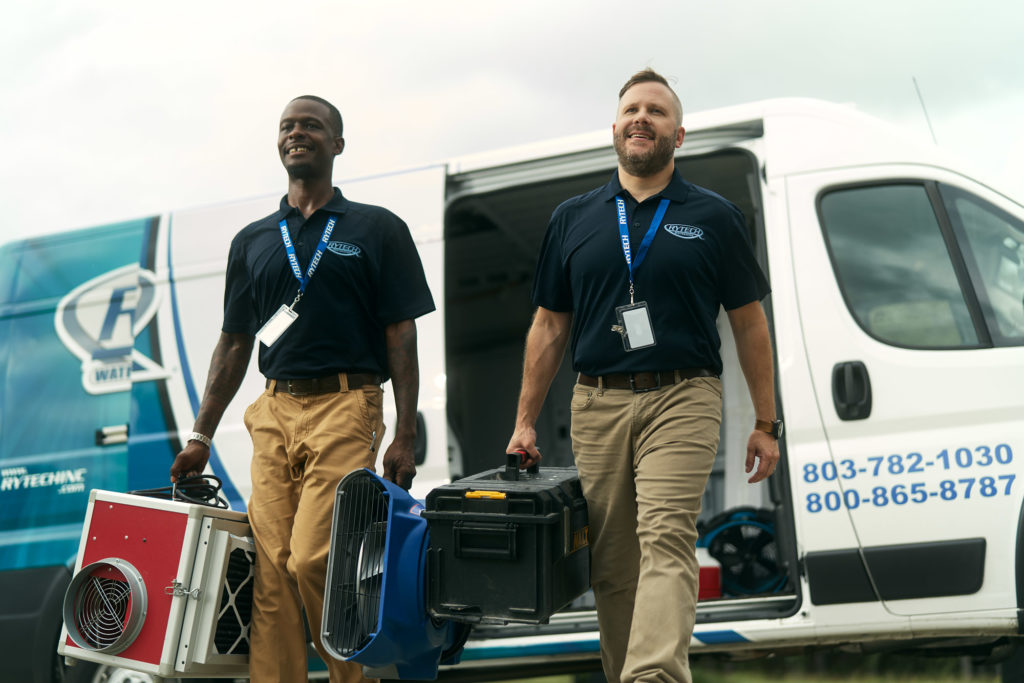
After firefighters leave, the next phase begins by determining how far fire, smoke, soot, odor, and firefighting water traveled through the property.
Rytech Restoration of Greater New Orleans serves homeowners, businesses, property managers, insurance professionals, and referral partners throughout New Orleans and Orleans Parish, along with communities in Jefferson Parish including Metairie, Kenner, Gretna, Marrero, Harvey, Avondale, and surrounding Greater New Orleans neighborhoods such as Gentilly and Carrollton.
If your home, rental property, commercial facility, or insured property has been affected by fire damage, smoke, soot, odors, firefighting water, sprinkler discharge, hidden moisture, or related mold concerns, call Rytech Restoration of Greater New Orleans at (504) 407-2998. The local team is available 24/7 to answer questions, inspect the property, and help determine what needs attention next.
GET INSPECTED TO STAY PROTECTED.
FAQs: Answering Your Pressing Fire Damage Repair Questions
When facing fire damage, you might have numerous questions swirling in your mind. As your professional fire damage restoration service provider in New Orleans, LA, we're here to provide clear, concise answers to help you navigate through this challenging time.


